Versão em português
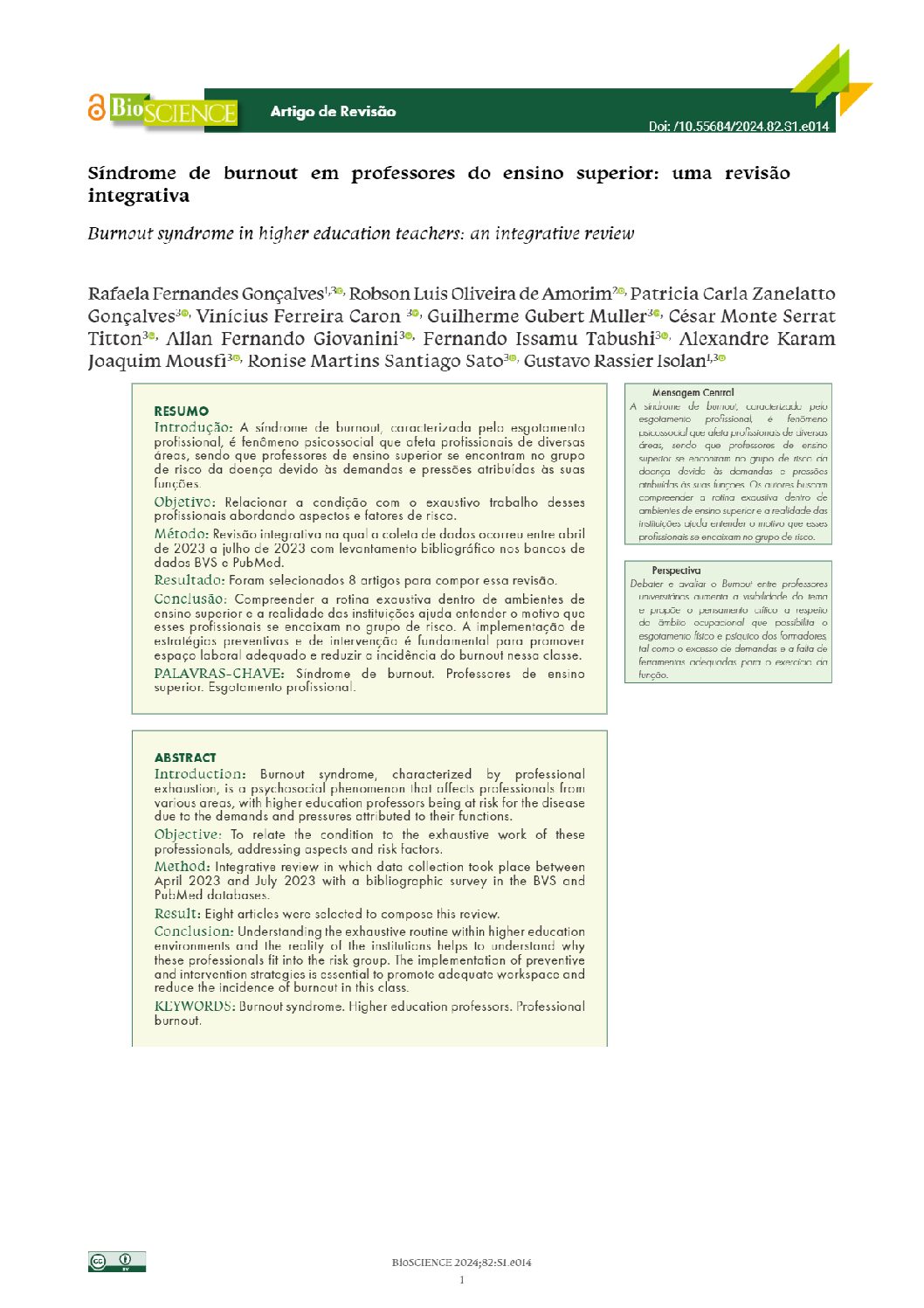
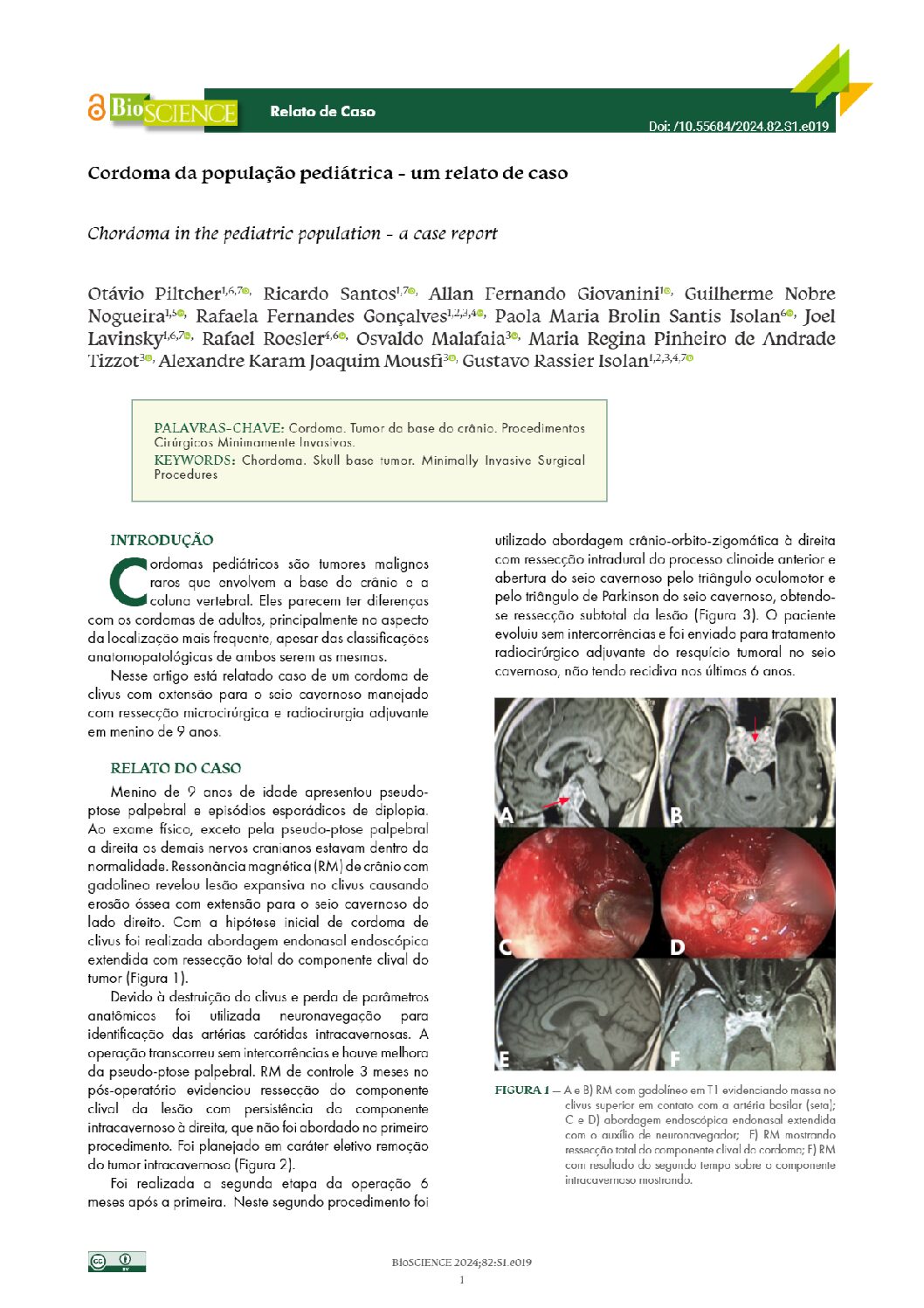
O artigo “Preservação auditiva com abordagem transtemporal retrolabiríntica para schwannoma vestibular: nota técnica”, publicado na BioSCIENCE em 2024, apresenta um relato de caso sobre a utilização da abordagem transtemporal retrolabiríntica no tratamento cirúrgico do schwannoma vestibular, também conhecido como neurinoma do acústico.
O schwannoma vestibular é um tumor benigno relacionado ao oitavo nervo craniano, frequentemente associado a perda auditiva unilateral, zumbido e alterações vestibulares. O tratamento cirúrgico tem como objetivos principais a remoção tumoral e a preservação das funções neurológicas, especialmente dos nervos facial e vestibulococlear.
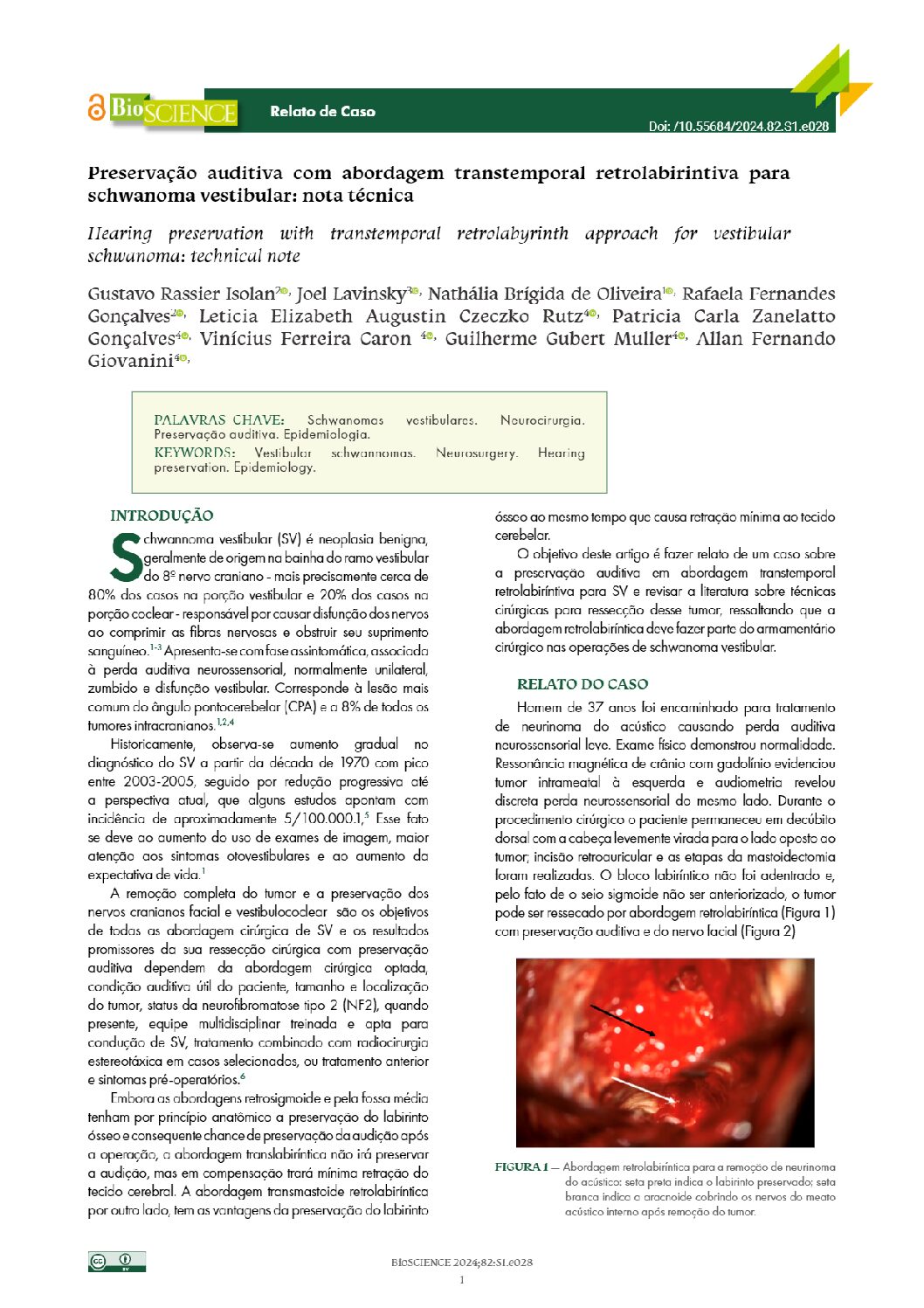
O artigo descreve o caso de um paciente de 37 anos com tumor intrameatal à esquerda e perda auditiva neurossensorial leve. A cirurgia foi realizada por abordagem retrolabiríntica, preservando o labirinto ósseo e permitindo a ressecção tumoral com preservação da audição e do nervo facial.
De forma geral, o trabalho destaca que a preservação auditiva em casos de schwannoma vestibular depende de fatores como tamanho e extensão do tumor, condição auditiva pré-operatória, idade do paciente, escolha da abordagem cirúrgica e experiência da equipe multidisciplinar. A abordagem retrolabiríntica é apresentada como uma alternativa importante no armamentário cirúrgico para casos selecionados, por permitir acesso ao meato acústico interno com preservação do labirinto e menor retração de estruturas cerebrais.
O Dr. Gustavo Rassier Isolan é o primeiro autor e autor correspondente do artigo, vinculado ao Departamento de Neurocirurgia do Centro de Neurologia e Neurocirurgia Avançada — CEANNE, em Porto Alegre. No trabalho, sua contribuição está relacionada à conceituação do estudo, reforçando sua atuação científica em neurocirurgia, cirurgia da base do crânio, schwannomas vestibulares e técnicas voltadas à preservação funcional em procedimentos cranianos complexos.
English version
The article “Hearing Preservation with Transtemporal Retrolabyrinthine Approach for Vestibular Schwannoma: Technical Note”, published in BioSCIENCE in 2024, presents a case report on the use of the transtemporal retrolabyrinthine approach in the surgical treatment of vestibular schwannoma, also known as acoustic neuroma.
Vestibular schwannoma is a benign tumor related to the eighth cranial nerve, often associated with unilateral hearing loss, tinnitus, and vestibular symptoms. Surgical treatment aims not only at tumor removal, but also at preserving neurological function, particularly the facial and vestibulocochlear nerves.
The article describes the case of a 37-year-old patient with a left intrameatal tumor and mild sensorineural hearing loss. Surgery was performed through a retrolabyrinthine approach, preserving the bony labyrinth and allowing tumor resection with preservation of hearing and facial nerve function.
Overall, the study emphasizes that hearing preservation in vestibular schwannoma surgery depends on factors such as tumor size and extension, preoperative hearing status, patient age, surgical approach selection, and the experience of a trained multidisciplinary team. The retrolabyrinthine approach is presented as an important option within the surgical armamentarium for selected cases, as it provides access to the internal auditory canal while preserving the labyrinth and minimizing retraction of brain structures.
Dr. Gustavo Rassier Isolan is the first author and corresponding author of the article, affiliated with the Department of Neurosurgery at the Center for Advanced Neurology and Neurosurgery — CEANNE, in Porto Alegre, Brazil. His contribution to the study is related to conceptualization, reinforcing his scientific work in neurosurgery, skull base surgery, vestibular schwannomas, and function-preserving techniques in complex cranial procedures.